Yamaha
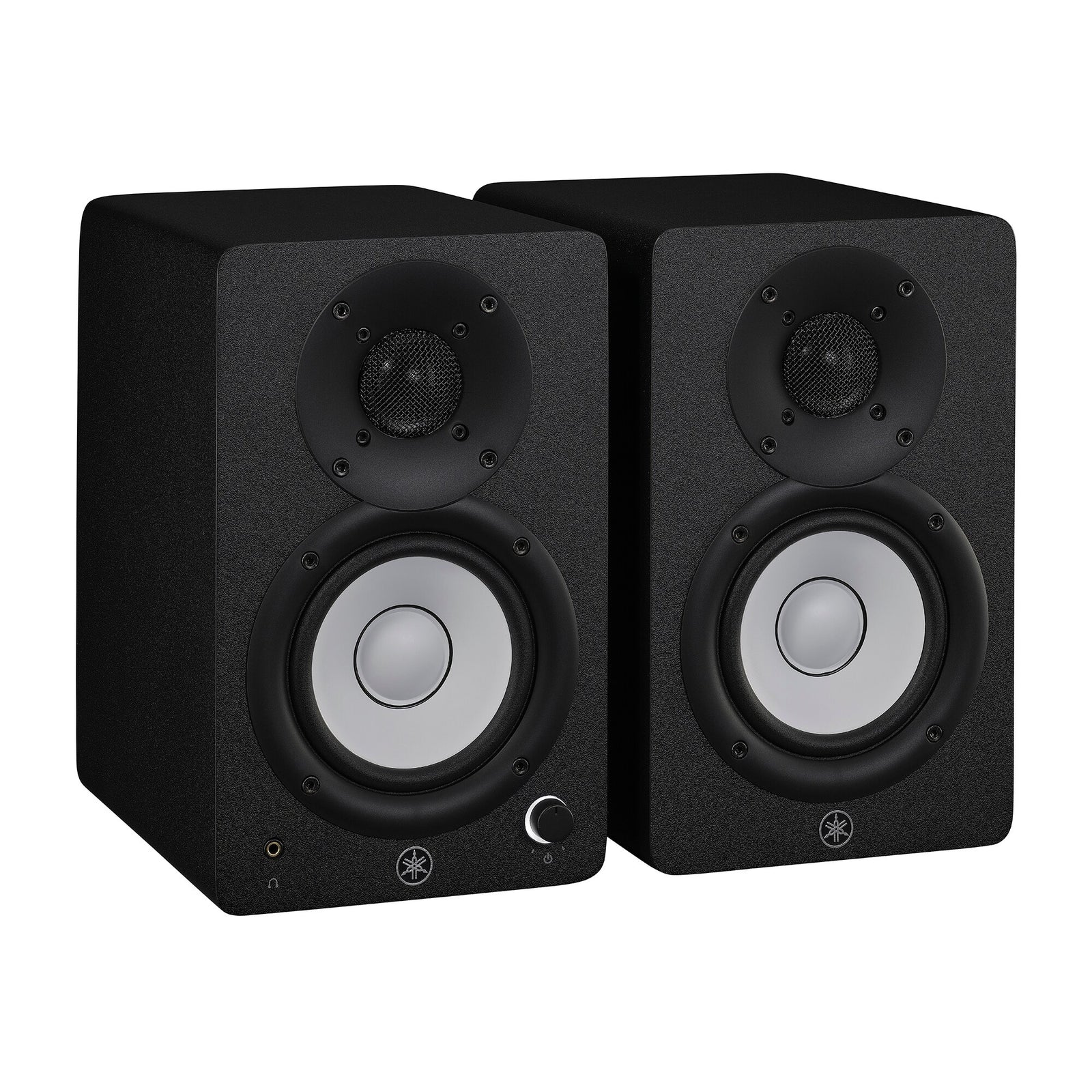
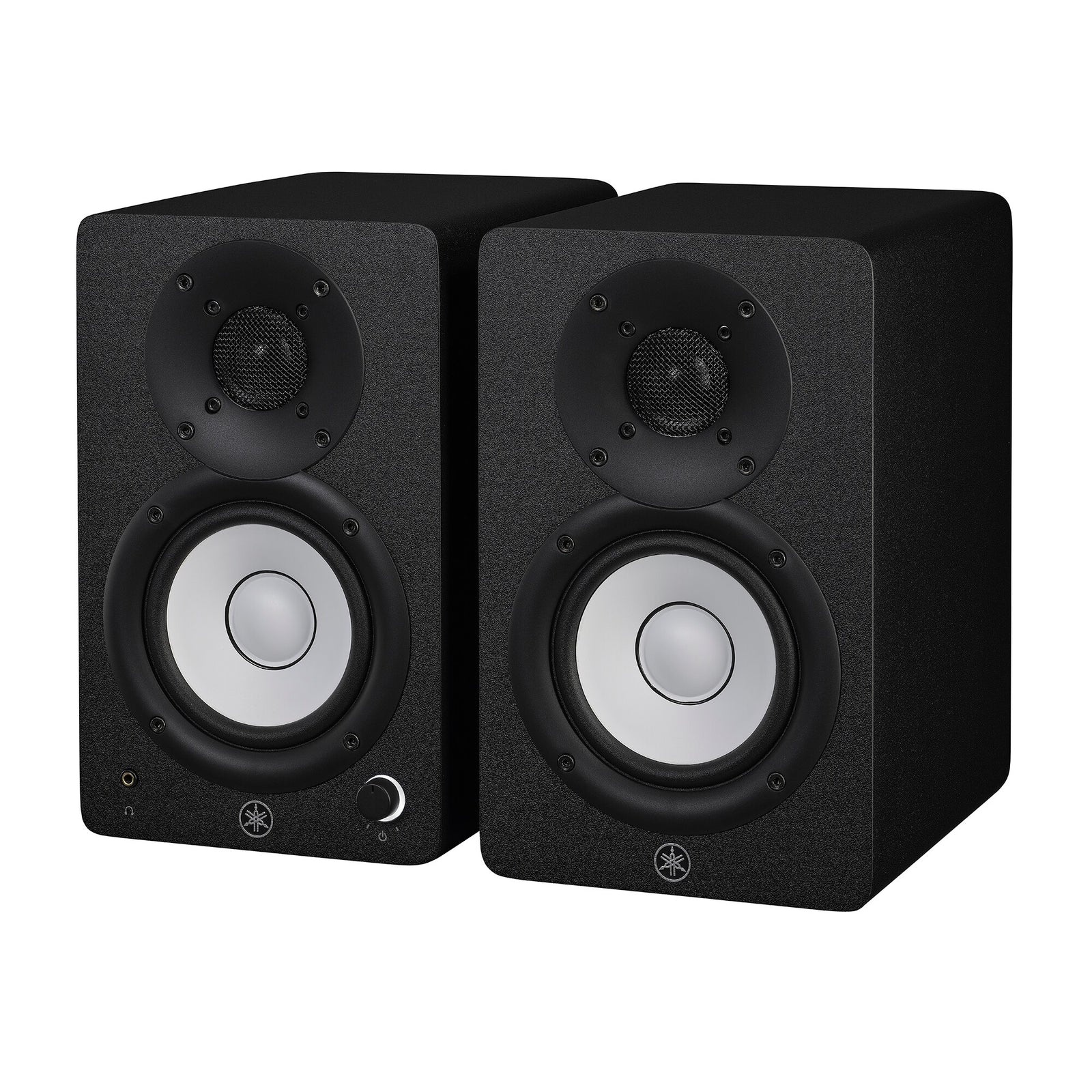
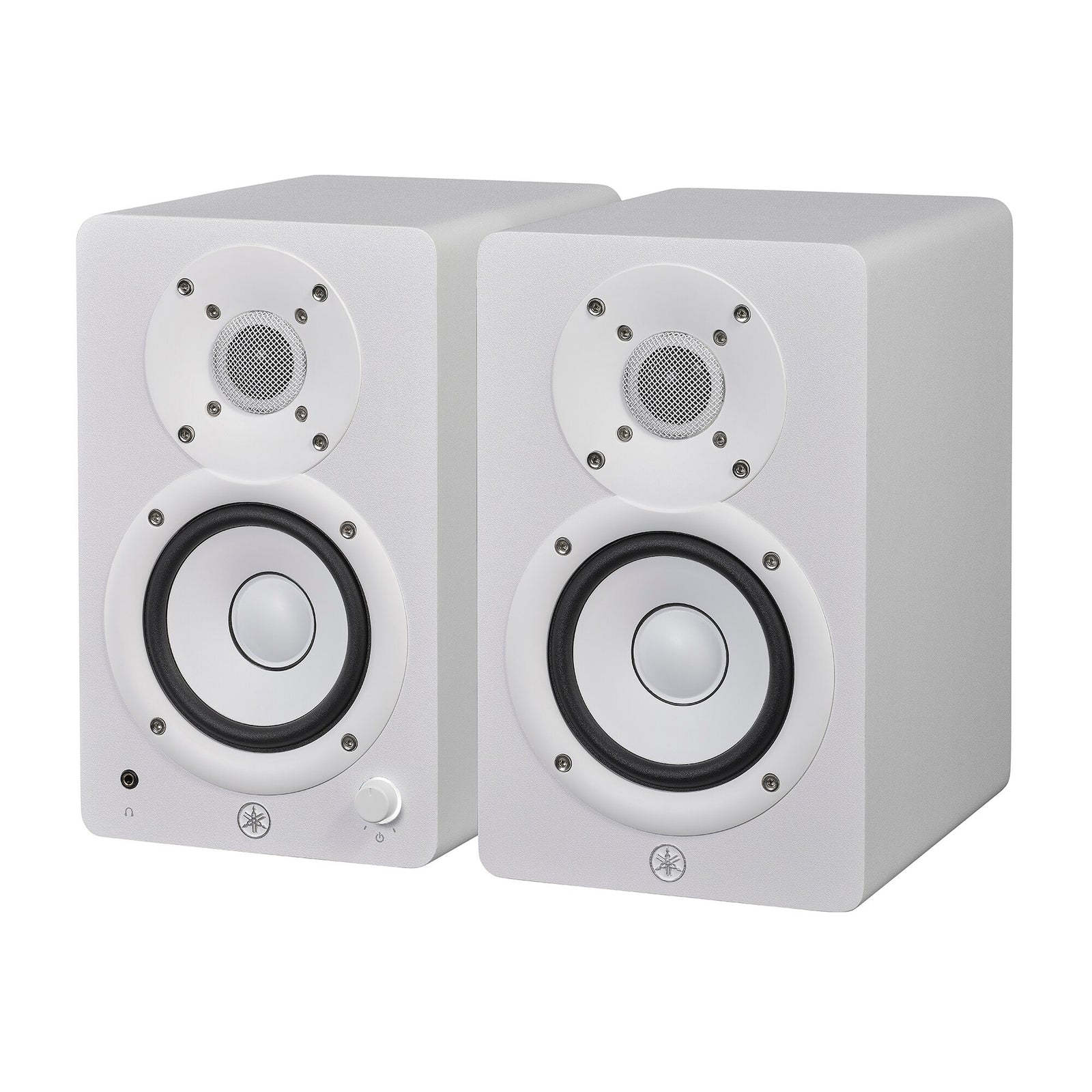
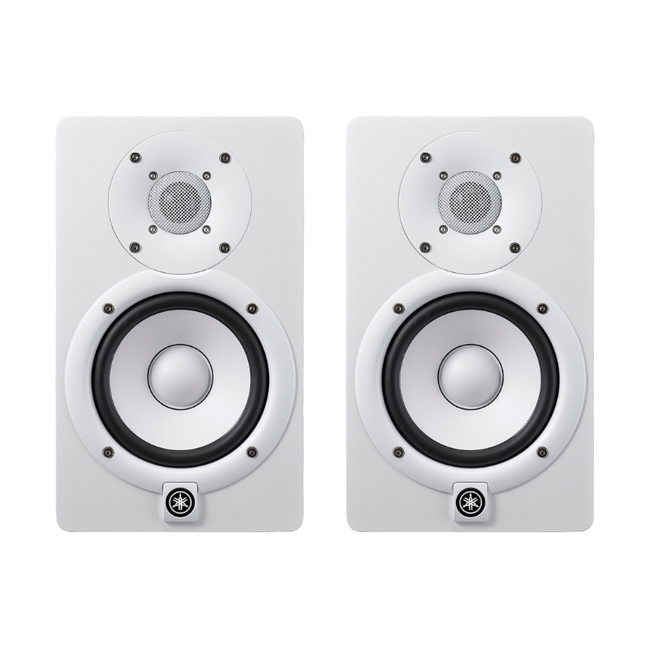
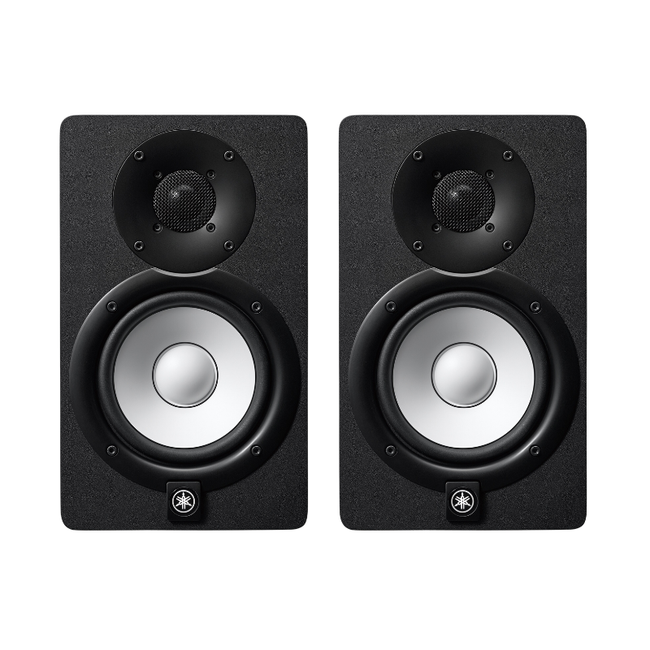
Yamaha HS4 4.5-Inch Powered Studio Monitors (Pair)
Yamaha HS4 4.5-Inch Powered Studio Monitors (Pair)
The desk pair that reaches lower.
- Sold as a pair - two speakers, plus the linking cable, in the box
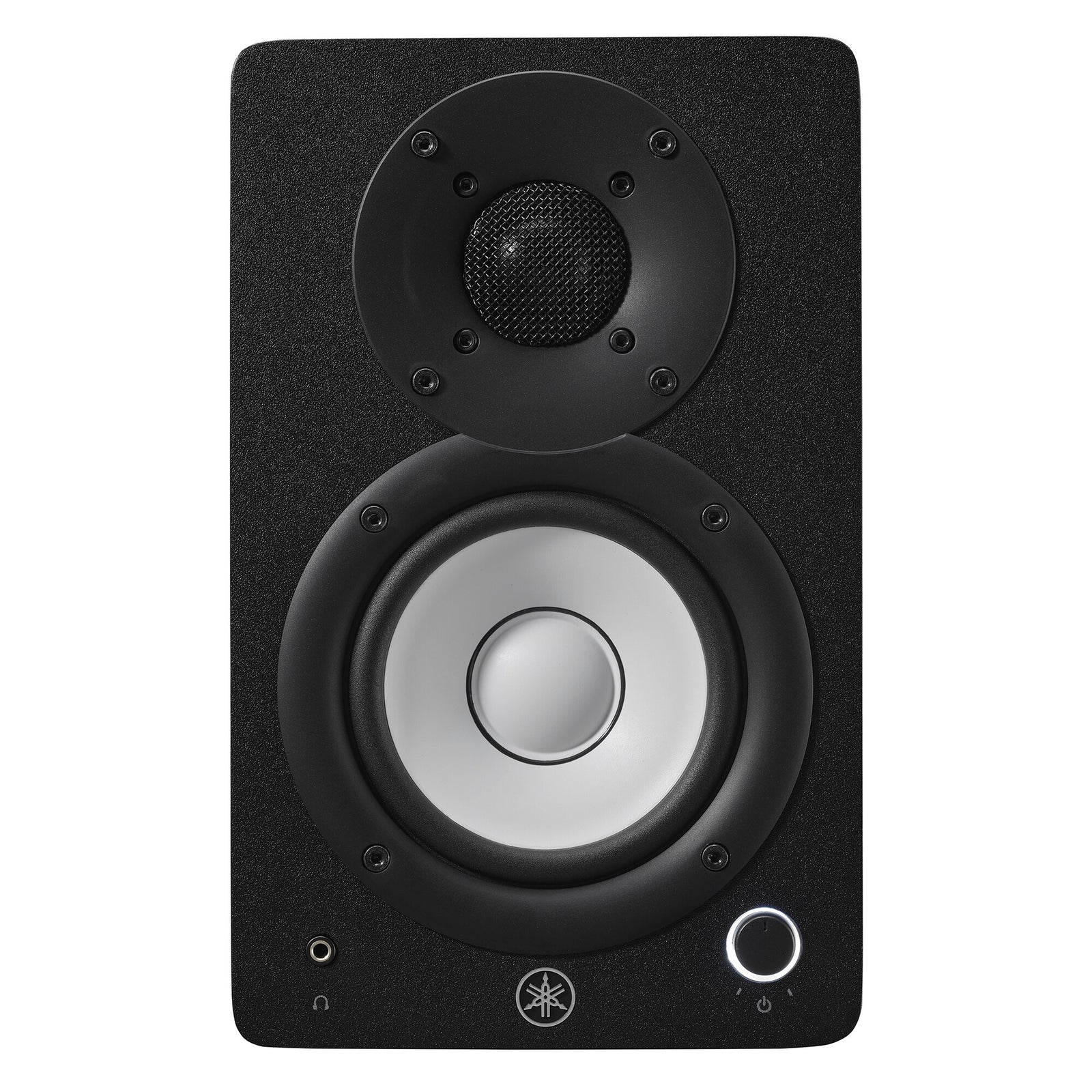
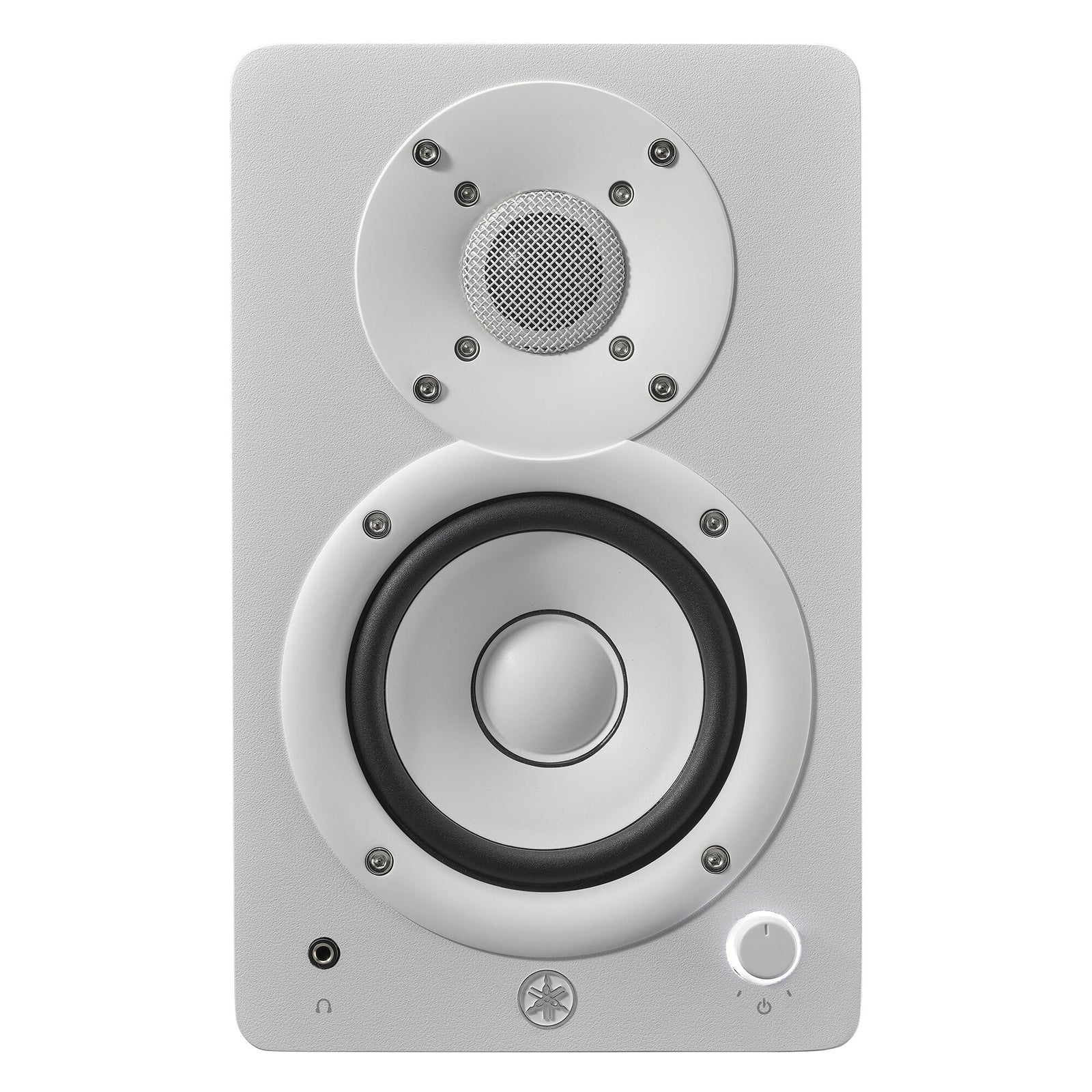
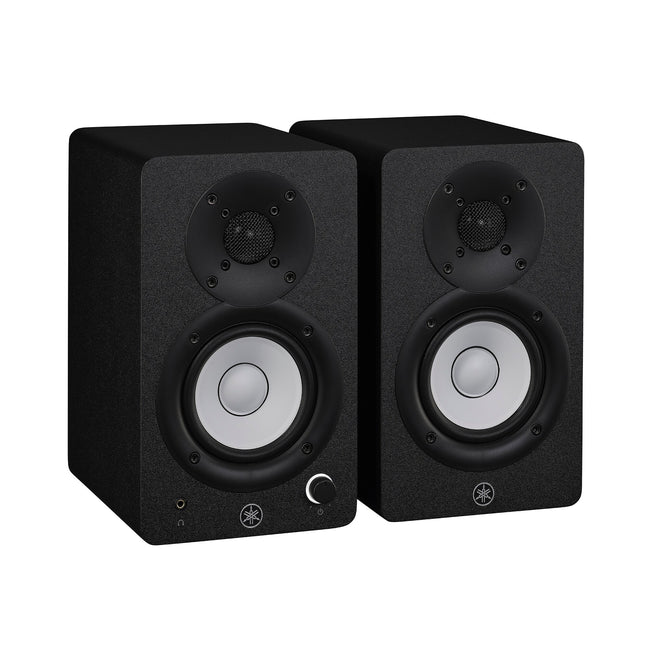
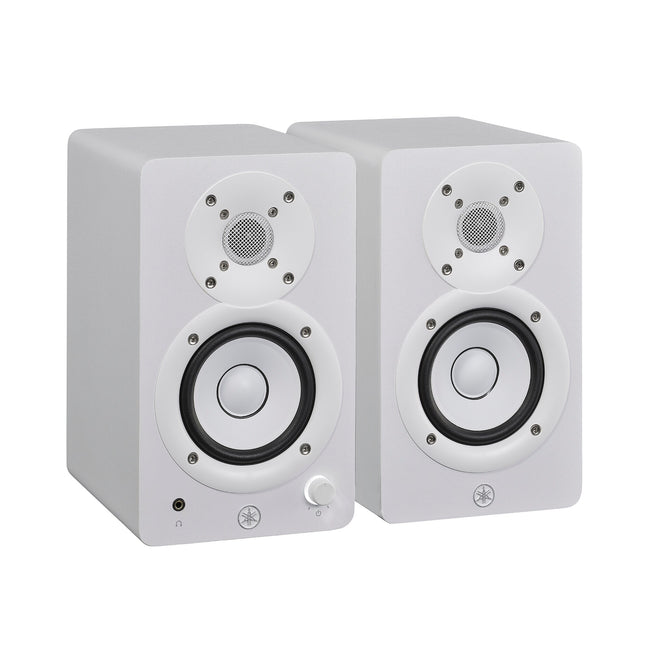
- Front-panel volume knob and headphone jack on the left speaker
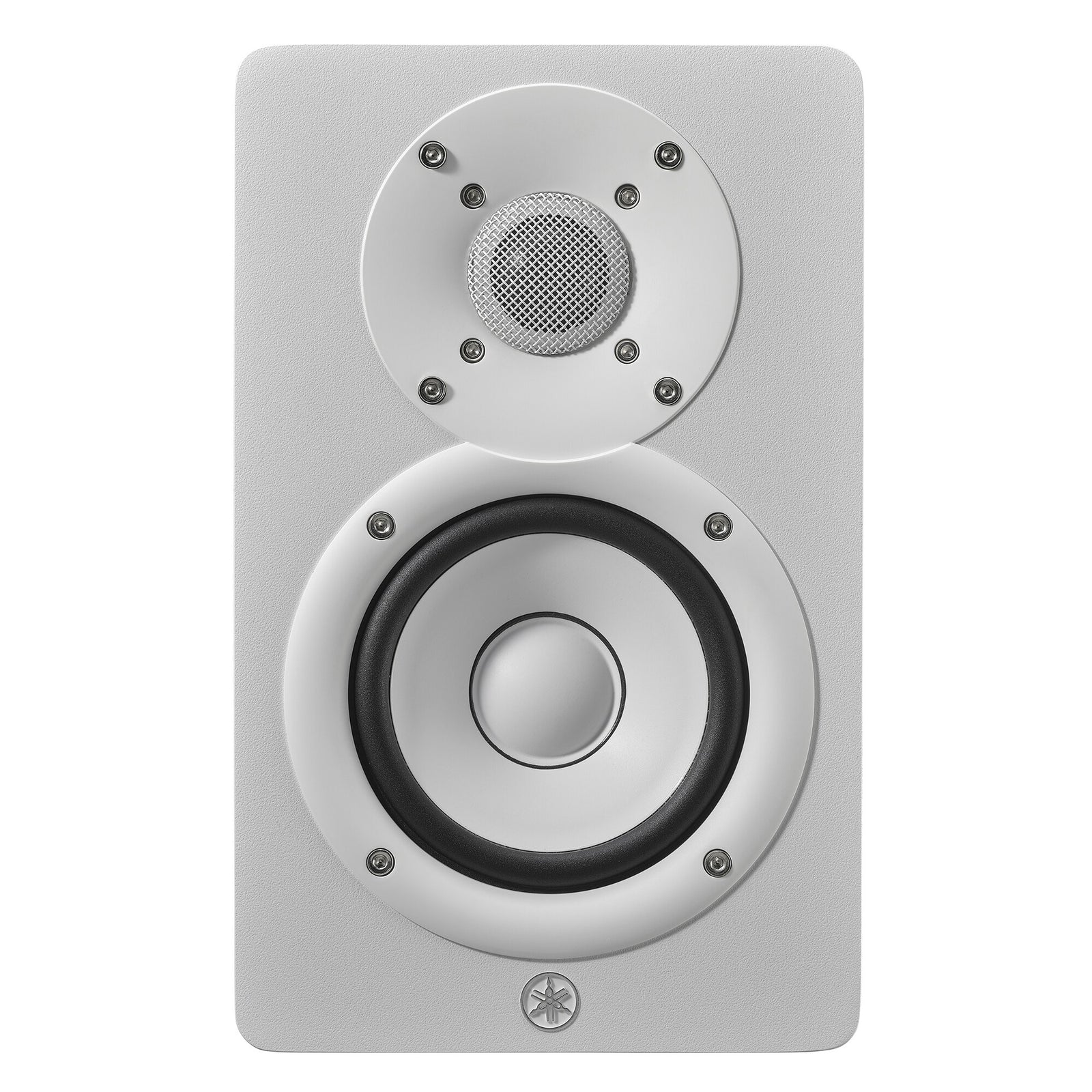
- 4.5-inch woofer and 1-inch tweeter, crossover at 2.3 kHz
- Frequency response 60 Hz-22 kHz
- RCA and 3.5 mm inputs connect a laptop with no audio interface - black or white
Product details
Watch & Hear It
The Desk Pair That Reaches Lower
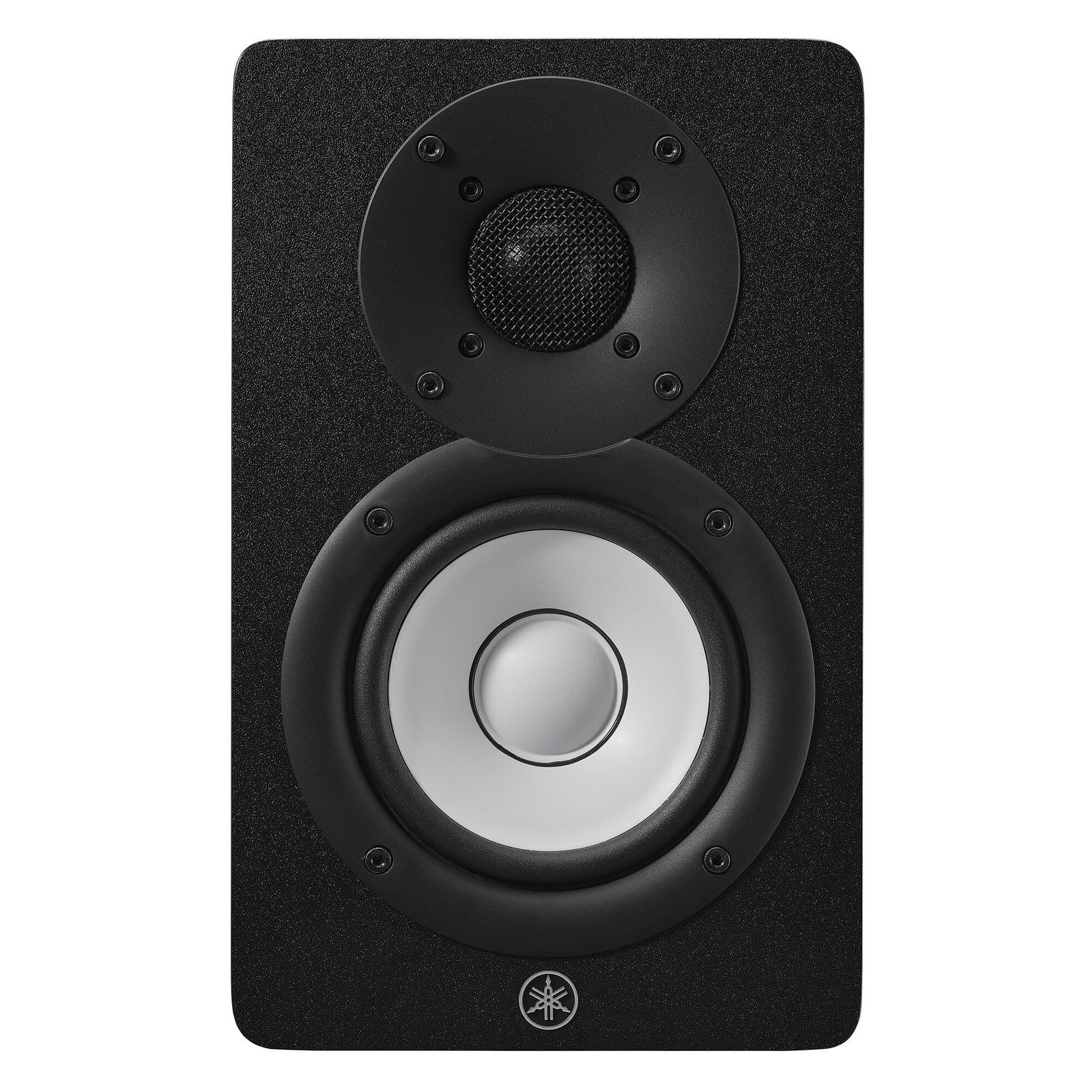
The HS4 is the larger of Yamaha's two pair-packaged monitors: a 4.5-inch woofer and a 1-inch tweeter against the HS3's 3.5-inch and 0.75-inch. That buys you real low end — 60 Hz at −10 dB where the HS3 stops at 70 Hz — and a lower 2.3 kHz crossover, which keeps more of the vocal range on a single driver.
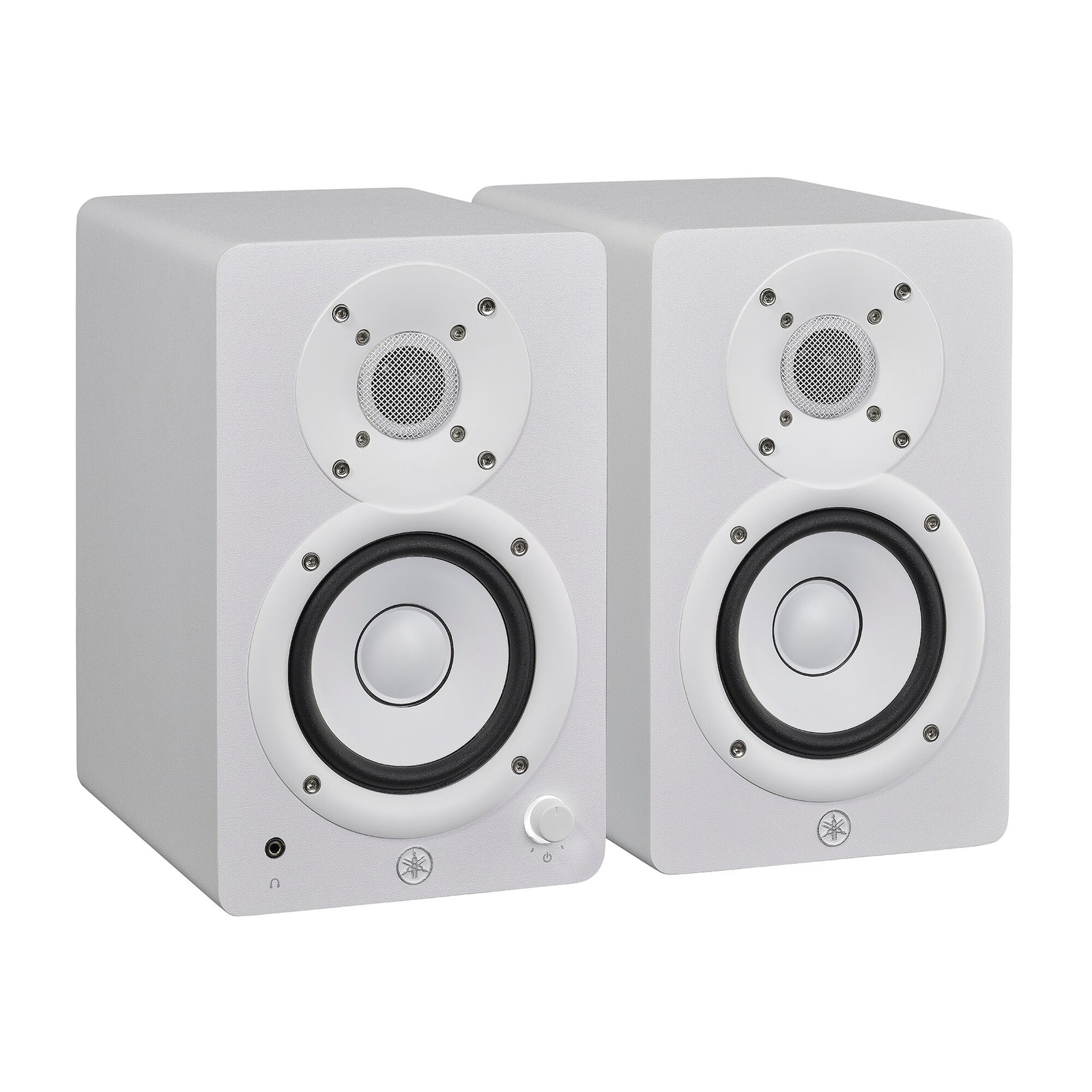
Everything convenient about the HS3 carries over. Both speakers, the linking cable and a stereo-mini-to-RCA lead are in the box; the RCA and 3.5 mm inputs mean a laptop, phone or tablet connects with no audio interface at all; and a volume knob and headphone jack sit on the front of the left speaker, so you set level and switch to headphones without a separate monitor controller.
At a Glance
What You Get
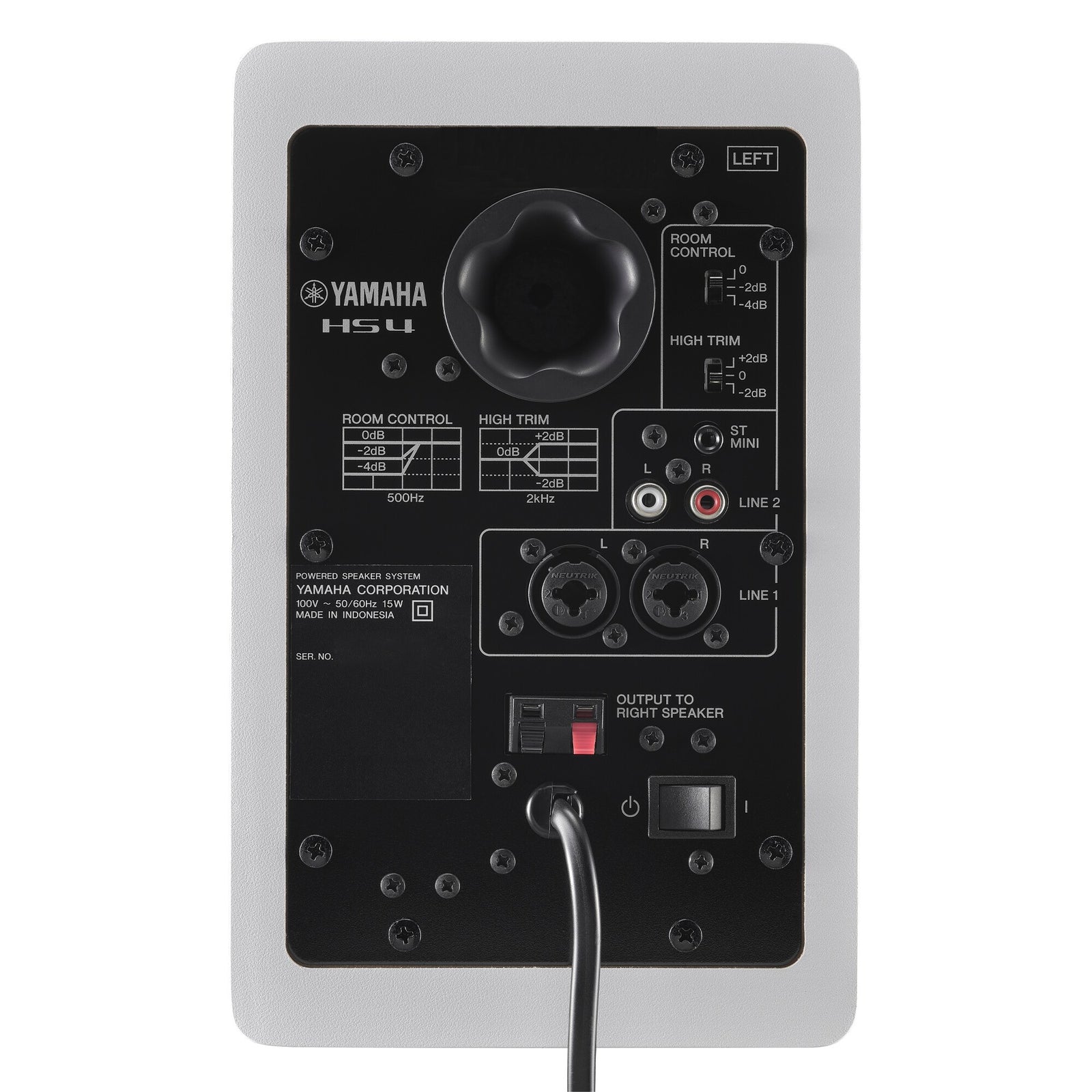
- Both speakers, in the box. The left cabinet holds the amplifier and all the connections; the right is passive and links to it with the supplied 2.5 m speaker cable.
- Front-panel volume knob and headphone jack on the left speaker — adjust level and switch to headphones from the front, without a separate monitor controller.
- 4.5-inch woofer and 1-inch dome tweeter — a full size step up from the HS3, crossing over at 2.3 kHz rather than 3.2 kHz, so less of the vocal range sits on the tweeter.
- Frequency response 60 Hz–22 kHz (−10 dB), 83 Hz–20 kHz (−3 dB).
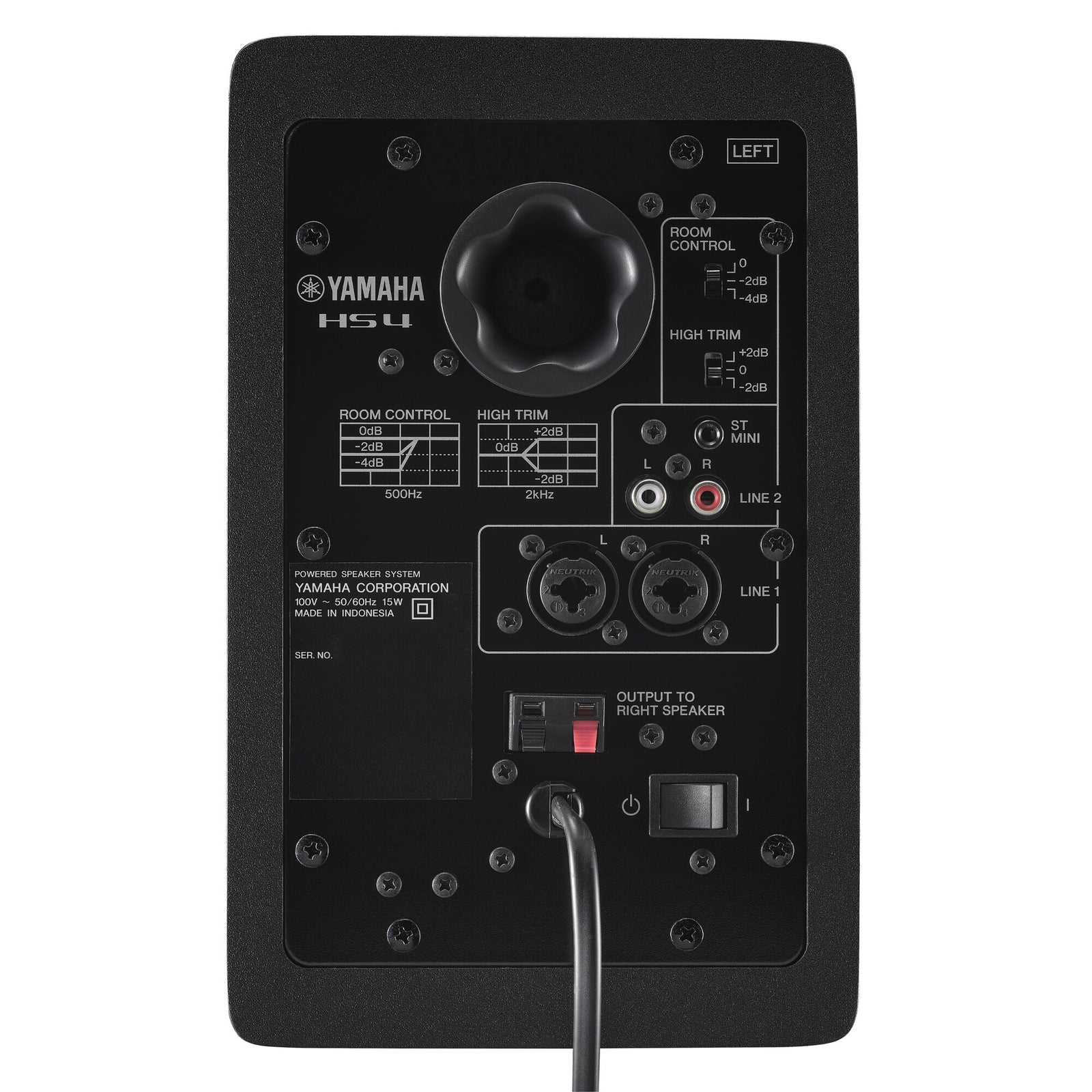
- Computer-friendly inputs: two combo XLR/TRS (LINE 1), two RCA (LINE 2) and a 3.5 mm stereo mini, with the stereo-mini-to-RCA cable included.
- Room Control and High Trim switches on the rear panel — cut 2 or 4 dB below 500 Hz when the speakers sit near a wall, and lift or cut 2 dB above 2 kHz to suit the room.
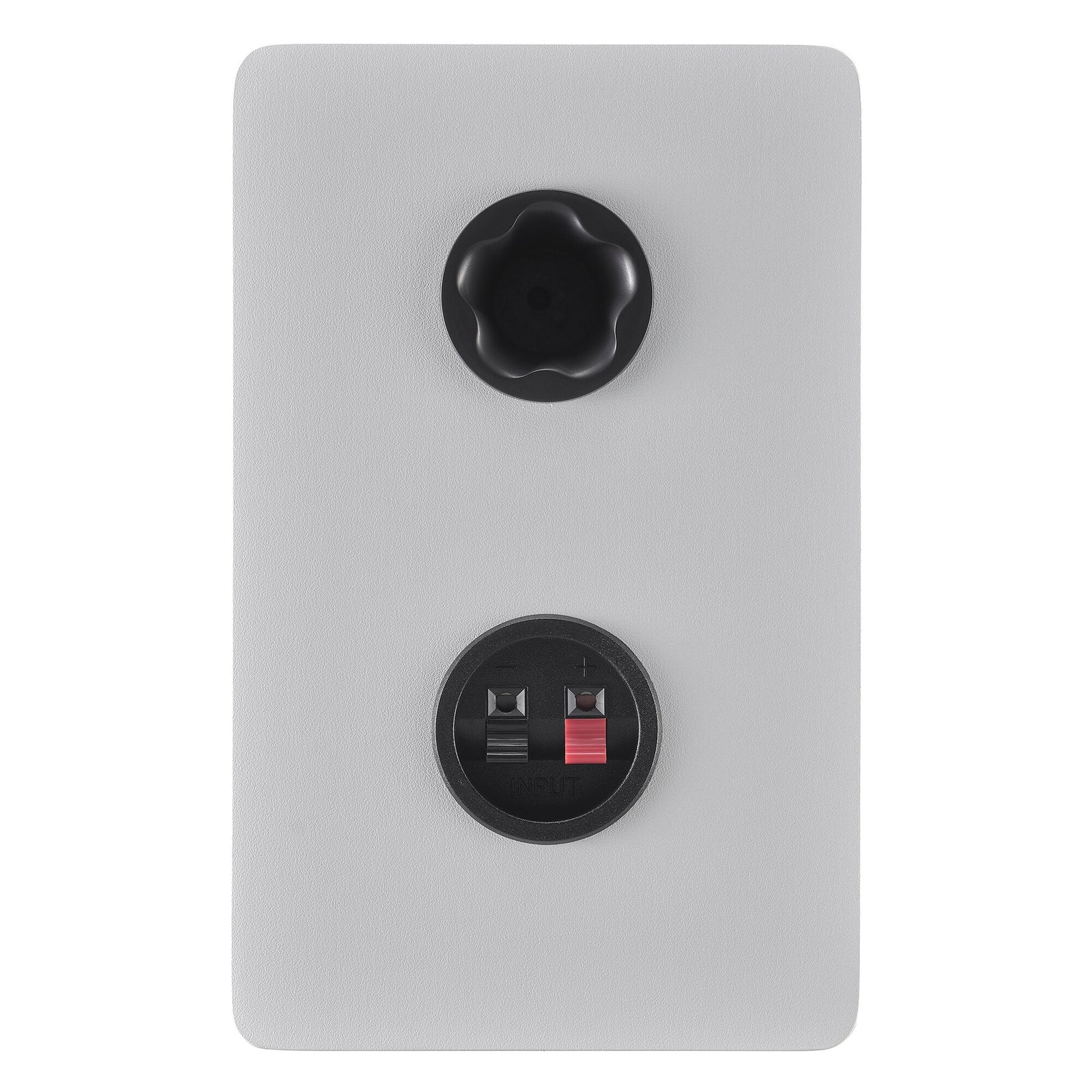
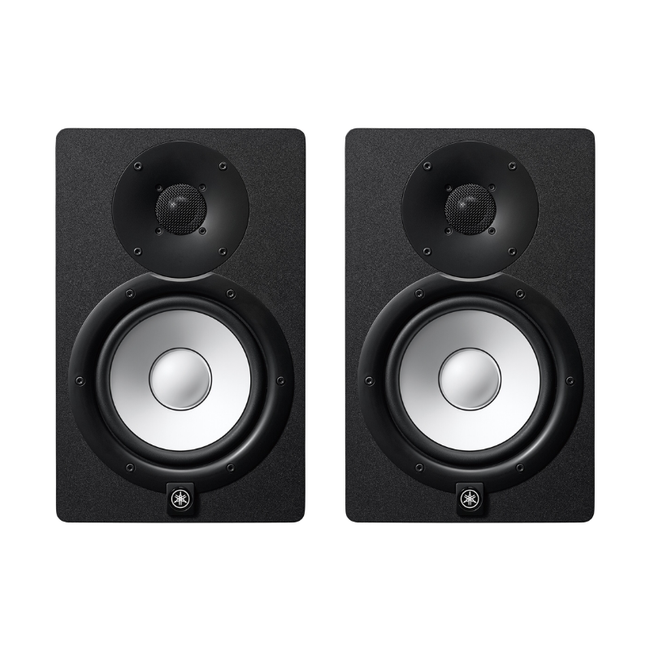
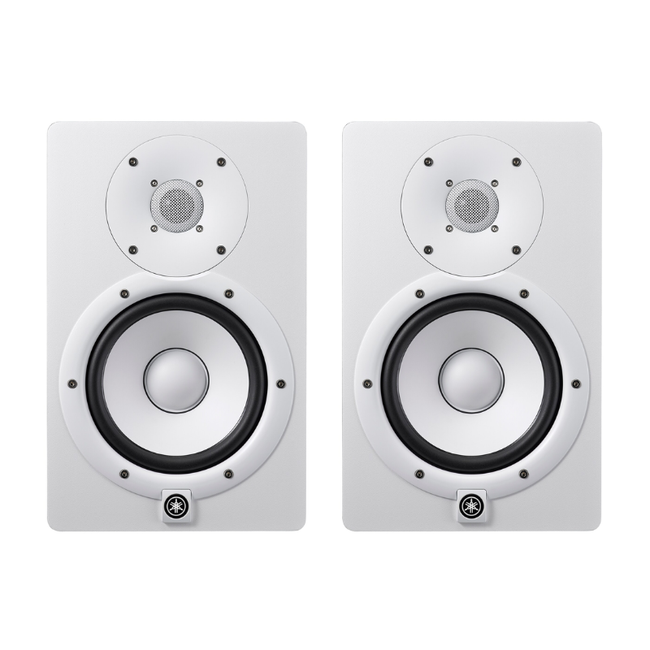
- Black or white, with Yamaha's signature white cone on both. Anti-slip pads included. 150 × 240 × 213 mm (left) and 150 × 240 × 203 mm (right); 3.7 kg and 3.1 kg.
Before You Buy: Three Things People Get Wrong
1. One amplifier drives both cabinets
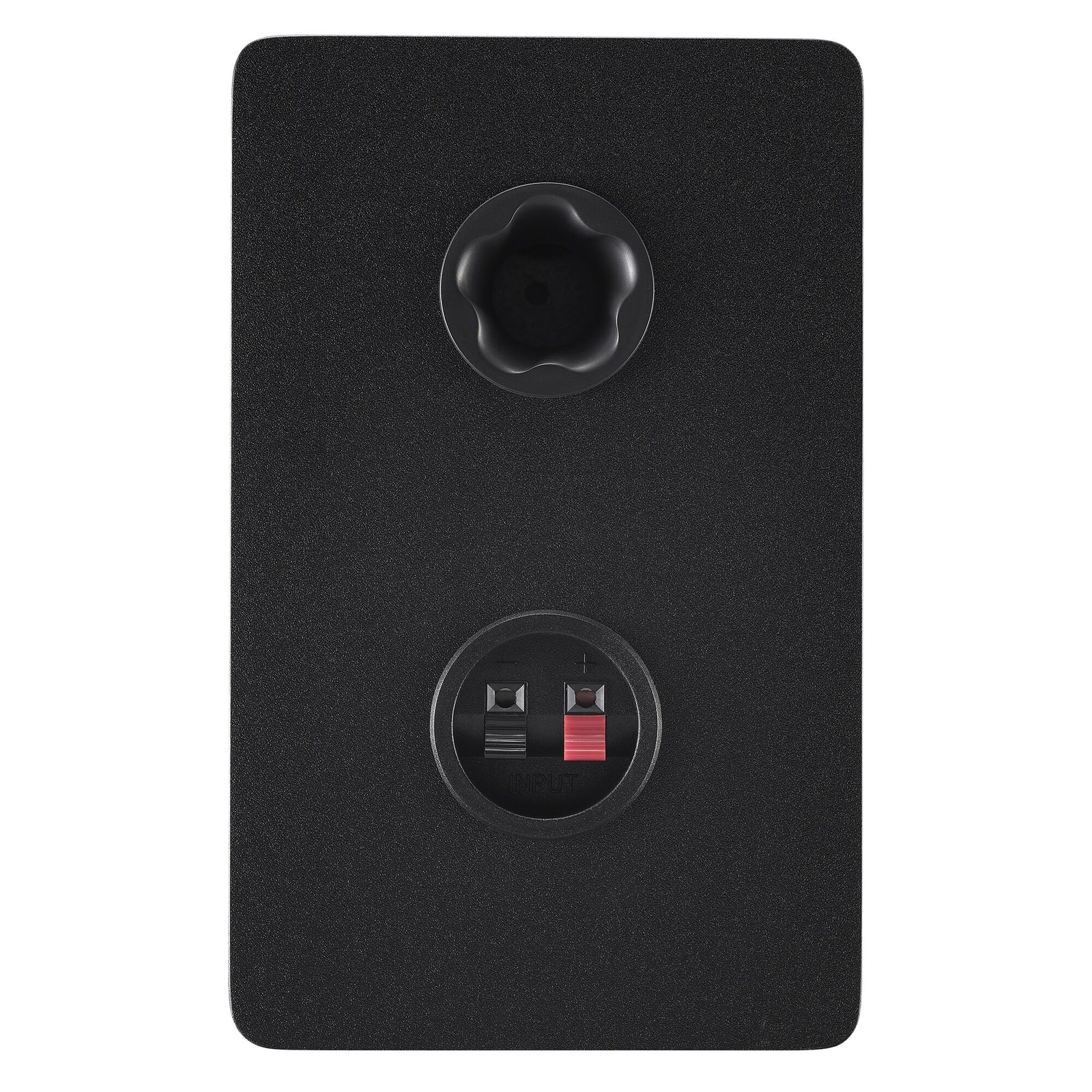
The left speaker is powered and the right is passive, linked by the supplied 2.5 m cable. That keeps the price down and the desk tidy, but it caps how far apart the two speakers can sit. From the HS5 upward, each speaker has its own amplifier and mains lead.
2. The bigger monitors will not plug into your laptop
HS5, HS7 and HS8 have balanced XLR and TRS inputs only, so feeding them from a computer needs an audio interface. The HS4 and HS3 add RCA and 3.5 mm inputs and include the cable — often the difference between spending nothing more and spending several thousand rupees more.
3. A 4.5-inch woofer still is not a sub
The HS4 is honest down to about 60 Hz — a real improvement on the HS3, and enough for arrangement, vocals and most mixing. But it will not show you sub-bass. If content below 60 Hz is central to your work, look at the HS7 or HS8.
The Yamaha HS Range at YMS
Every HS studio monitor we stock. All are sold as pairs — only the HS8S subwoofer is a single unit.
| Model | Woofer | Amp power | Response (-10 dB) | Inputs | Amplification |
|---|---|---|---|---|---|
| HS3 | 3.5" | 26 W + 26 W | 70 Hz - 22 kHz | XLR/TRS, RCA, 3.5 mm | Left powered, right passive |
| HS4 | 4.5" | 26 W + 26 W | 60 Hz - 22 kHz | XLR/TRS, RCA, 3.5 mm | Left powered, right passive |
| HS5 | 5" | 70 W per speaker | 54 Hz - 30 kHz | XLR, TRS | Both speakers powered |
| HS7 | 6.5" | 95 W per speaker | 43 Hz - 30 kHz | XLR, TRS | Both speakers powered |
| HS8 | 8" | 120 W per speaker | 38 Hz - 30 kHz | XLR, TRS | Both speakers powered |
| HS8S | 8" subwoofer | 150 W | 22 Hz - 160 Hz | XLR, TRS | Subwoofer, sold singly |
FAQ
Q. HS4 or HS3?
The HS4 reaches about 10 Hz lower and uses a larger woofer and tweeter with a lower crossover, so more of the vocal range sits on one driver. Both are pairs with the same amplifier and the same connections. If your desk has room and the budget allows, the HS4 is the better monitor; if space or money is tight, the HS3 gives up less than the price gap suggests.
Q. Is the white version different from the black?
Only in appearance. Drivers, amplifier, response, switches, connections and supplied cables are identical, and both finishes are the same price. Both use Yamaha's signature white cone.
Q. Do I need an audio interface?
No. The RCA and 3.5 mm inputs take a headphone output from a laptop, phone or tablet directly, and Yamaha includes the cable. An interface will improve your converters and let you record, but nothing stops you working on day one without one.
Q. Is only one speaker powered?
Yes — the left cabinet contains the amplifier, every input and the front volume knob, and drives the passive right cabinet through the supplied 2.5 m cable.
Q. Is there a headphone output?
Yes, on the front of the left speaker next to the volume knob — useful for late-night work without moving cables or adding a monitor controller.
Q. Can I add a subwoofer?
The HS8S is designed to partner the HS series, but it is a substantial 8-inch, 150 W, 12.5 kg unit that costs well over twice what this pair does. On a desk setup that is rarely the right order of spending — if low end is what you are missing, moving up the range is usually the better answer.
Why Buy from YMS?
YMS For Music is an authorised Yamaha Premium Retailer. Every monitor is genuine Yamaha stock with full manufacturer warranty.
Monitors are worth hearing before you commit — come and listen in Bengaluru or Mangaluru. If you tell us your room size and what you are mixing, we will tell you honestly whether you need to spend more than this. Secure delivery across India.
Specifications
Overview
| Model | Yamaha HS4 |
|---|---|
| Type | 2-way powered studio monitors, bass-reflex |
| Packaging | Sold as a pair (left powered, right passive) |
| Finishes | Black or White - select above |
Drivers & Amplifier
| Woofer | 4.5 in cone |
|---|---|
| Tweeter | 1 in dome |
| Amplifier Power | 26 W + 26 W (dynamic, RL=6 ohm); 20 W + 20 W (THD 0.1%, 1 kHz, RL=6 ohm) |
| Crossover | 2.3 kHz |
Performance
| Frequency Response (-10 dB) | 60 Hz - 22 kHz |
|---|---|
| Frequency Response (-3 dB) | 83 Hz - 20 kHz |
| Room Control | 0 / -2 / -4 dB under 500 Hz |
| High Trim | +2 / 0 / -2 dB above 2 kHz |
Connections
| Left - front panel | Volume knob with power indicator, headphone jack |
|---|---|
| Left - LINE 1 | 2 x combo XLR/TRS phone (L, R) |
| Left - LINE 2 | 2 x RCA (L, R) |
| Left - ST MINI | 1 x 3.5 mm stereo mini |
| Left - output | Speaker terminals, output to right speaker |
| Right (passive) | Speaker terminals only - no inputs, no power |
General
| Dimensions - Left (W x H x D) | 150 x 240 x 213 mm |
|---|---|
| Dimensions - Right (W x H x D) | 150 x 240 x 203 mm |
| Weight | 3.7 kg (left), 3.1 kg (right) |
| Included | Stereo mini to RCA cable 1.5 m, speaker cable 2.5 m, anti-slip pads, Quick Start Guide, Safety Guide |
Sold as a pair in a choice of black or white at the same price. Only the left cabinet is powered; it drives the right through the supplied speaker cable, so placement is limited by that 2.5 m length. Specifications from Yamaha official product data; front-panel controls confirmed from Yamaha product photography.
Similar products
-
Yamaha HS7 6.5-Inch Powered Studio Monitors (Pair)
MRP₹30,90030% OFFYMS Price from₹21,535 -
Yamaha HS3 3.5-Inch Powered Studio Monitors (Pair)
MRP₹25,00027% OFFYMS Price₹18,225 -
-
Yamaha HS8 8-Inch Powered Studio Monitors (Pair)
MRP₹35,00030% OFFYMS Price from₹24,382 -
Yamaha HS5 5-Inch Powered Studio Monitors (Pair)
MRP₹23,20031% OFFYMS Price from₹15,912
Reviews
There are no reviews yet.