Product details
The L Series Top, and the L Series Neck, at a Lower Price.
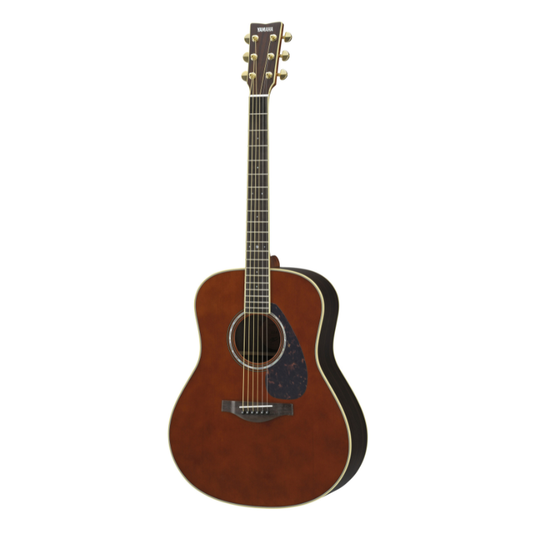
The Yamaha LS6 ARE is an entry point to Yamaha's L Series, and it does not economise where it counts. The top is the same hand-selected solid Engelmann spruce with A.R.E. that Yamaha fits to the LS16 — a genuinely aged, played-in top rather than a stiff new one. The neck is the same 5-ply mahogany and rosewood construction, and the pickup is the same passive SRT Zero Impact system.
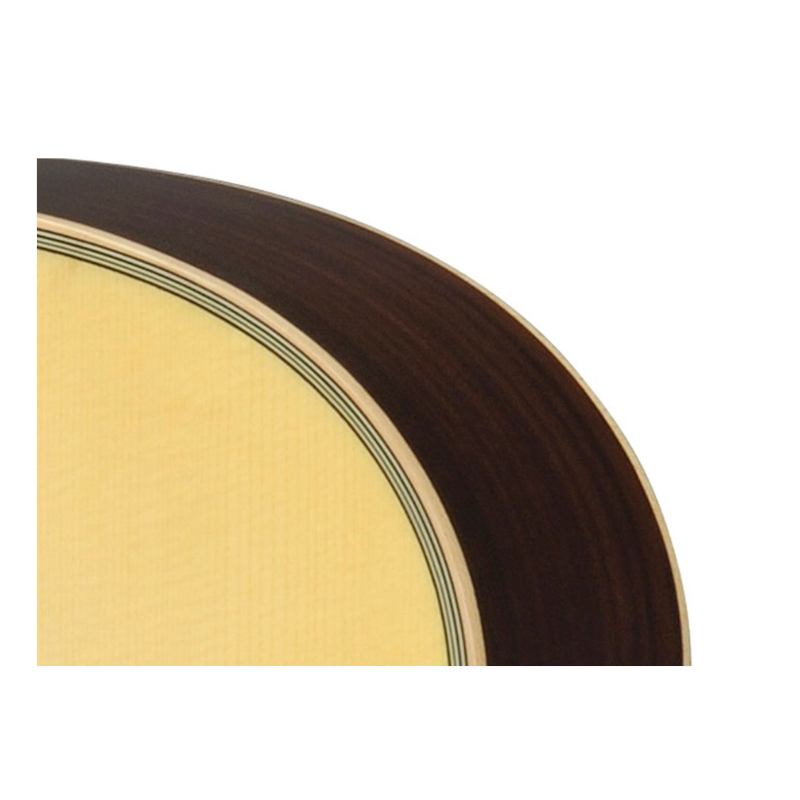
What changes is what surrounds it. The back and sides are layered rosewood rather than solid, the fingerboard and bridge are rosewood rather than ebony, and the binding is cream instead of maple. Those are the parts that let Yamaha take a large amount off the price while leaving the guitar's voice and feel largely intact.
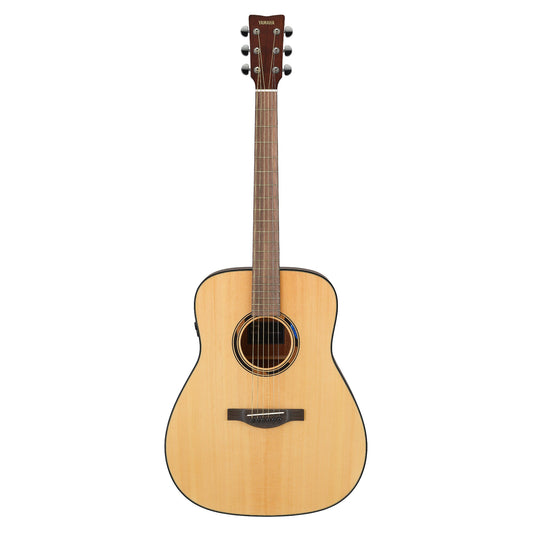
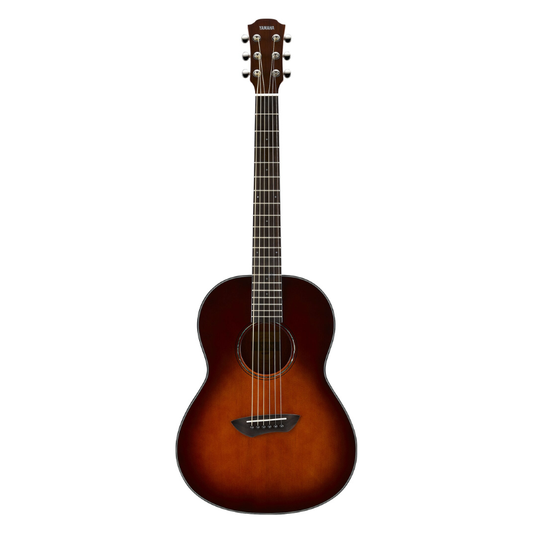
The result is a concert-body electro-acoustic that sounds well beyond its price, in the same 380 mm body as the LS16, in Natural or Brown Sunburst.
A.R.E. — Acoustic Resonance Enhancement
An acoustic guitar sounds better after years of playing because the cellular structure of the top slowly changes. A.R.E. is Yamaha's method of reaching that state in the factory, without heat-charring the wood or removing anything from it. On the LS6 it is applied to exactly the same solid Engelmann spruce Yamaha uses further up the range.
1. Controlled atmosphere, not fire
Yamaha manipulates temperature, humidity and atmospheric pressure together, in a sealed process, rather than simply baking the wood.
2. The molecules change
The process alters the molecular properties of the wood, reaching conditions Yamaha describes as similar to the molecular characteristics of woods in instruments that have been played for years.
3. You hear it on day one
The result is a top that is already loose and responsive — stronger fundamentals, richer overtones and more volume from less effort. It still opens up further as you play it.
Key Features
Solid Engelmann spruce top with A.R.E. — the same as the LS16
This is the single most important part of an acoustic guitar's sound, and Yamaha does not downgrade it here. Engelmann is lighter and more elastic than the Sitka used on most guitars in this bracket, so the LS6 responds to a light touch instead of needing to be driven.
Layered rosewood back and sides
Rosewood gives the LS6 its scooped midrange and clear treble. In layered form it is also considerably more tolerant of humidity swings and knocks than solid rosewood — a fair trade for a guitar that gets carried around, and part of why the price is what it is.
The full 5-ply neck, not a cost-reduced one
Five laminations of mahogany and rosewood with a volute at the headstock and a double-action adjustable rod — identical to the LS16. Grain directions oppose each other across the laminations, so the neck resists twisting and seasonal movement.
Concert body with the L Series voice
Yamaha describes the LS shape as having “excellent total balance” and delivering “a big, confident sound for its size”, and recommends it for fingerstyle players. The body is dimensionally identical to the LS16 — 380 mm wide, 100–120 mm deep.
SRT Zero Impact passive pickup — no controls, no battery, no holes
The same passive system as the rest of the L Series, with an individual piezo element under each string, designed to “minimize the pickup's impact on the tone and traditional appearance of the instrument”. No preamp box in the side, no battery to die mid-set — just a LINE OUT jack. Set your level at the desk or through a preamp.
Gold tuners and an abalone rosette
The LS6 keeps the die-cast gold TM29G tuners, the abalone, black and white sound-hole rosette and the tortoise-pattern pickguard from further up the range, over a gloss body and matte neck. Binding is cream and black; the fingerboard and bridge are rosewood.
Elixir strings fitted; add a bag or case
Elixir NANOWEB 80/20 Bronze Light strings come fitted from the factory. Yamaha does not include a bag or case with the LS6 — ask us and we will add a suitable gig bag or hard case to your order.
LS6 or LS16?
Same body size, same top, same neck, same pickup. Here is exactly what your money buys when you step up.
| LS6 (this guitar) | LS16 | |
|---|---|---|
| Top | Solid Engelmann spruce with A.R.E. | Identical |
| Back & sides | Rosewood, layered | Rosewood, solid |
| Fingerboard & bridge | Rosewood | Ebony |
| Body binding | Cream + black | Maple + black |
| Neck | 5-ply mahogany + rosewood, volute | Identical |
| Tuners | Die-cast gold TM29G | Identical |
| Pickup | Passive SRT Zero Impact | Identical |
| Body size | Concert, 380 mm wide | Identical |
| Bag | Not included | Stiffened fabric gig bag |
FAQ
Q. Is the LS6 all solid wood?
No, and we would rather say so plainly. The top is solid Engelmann spruce with A.R.E. — the part that does most of the work. The back and sides are layered rosewood. For all-solid construction in the same body, look at the LS16.
Q. How much difference do solid back and sides actually make?
Less than the top, but it is audible: solid rosewood adds overtone complexity and keeps developing over years, where layered stays roughly as it started. Layered is tougher and more humidity-stable in return. If your budget stretches, play both back to back — the difference is real but it is not night and day.
Q. Rosewood or ebony fingerboard — does it matter?
Mostly it is feel and wear. Ebony is denser and slicker under the fingers and resists wear longer; rosewood is slightly softer and more open-pored. Both are entirely serviceable, and a good setup matters far more than the board material.
Q. Is A.R.E. the same as a torrefied or roasted top?
They aim at the same result but are not the same process. Torrefaction bakes wood at high heat. A.R.E. controls temperature, humidity and atmospheric pressure together to alter the wood's molecular properties. Yamaha developed it in-house and uses it across the L Series.
Q. Where are the volume and tone controls?
There aren't any, by design. The SRT Zero Impact system is passive, so there is no preamp, no battery and no control panel routed into the side. You plug into the LINE OUT jack and set the level at your amp, mixer or an outboard acoustic preamp/DI.
Q. Does it come with a bag or case?
No. Yamaha lists only a hex wrench with the LS6 — unlike the LS16 and LL16, which include a stiffened fabric gig bag. Tell us when you order and we will recommend a bag or hard case to go with it.
Q. Is a concert body too small to strum?
No. Yamaha describes the LS as delivering “a big, confident sound for its size”. A dreadnought will still move more air — if you mostly strum hard in a band, ask us about the LL16.
Q. How does the LS6 compare with the TransAcoustic models?
Different purposes. The TAG1E/TAS1E build reverb and chorus into the guitar for playing at home. The LS6 has no onboard effects — it puts the money into the top, the neck and the L Series build instead.
Q. How should I look after a solid-top guitar?
Keep it in a bag or case when you are not playing, away from direct sun and air-conditioning vents, and use a soundhole humidifier in very dry weather. The solid top is more responsive than laminate and also more sensitive to humidity swings.
Why Buy from YMS?
- ✓ Authorised Yamaha Premium Retailer: Buy a genuine India-market Yamaha instrument with official manufacturer warranty support.
- ✓ Set up before it reaches you: We check action, relief and intonation so the guitar plays properly from the first day.
- ✓ Honest comparisons: Our team will talk you through LS6 versus LS16 versus LL16 and tell you when the cheaper one is the right call.
- ✓ Support beyond the guitar: The LS6 ships without a bag — ask us about gig bags, hard cases, humidifiers, Elixir strings, capos, stands and cables.
- ✓ Pan-India delivery: Order from anywhere in India, subject to serviceability for your location.
- ✓ Physical-store support: YMS teams in Bengaluru and Mangaluru are available for product enquiries and after-sales guidance.
Specifications
Overview
| Model | Yamaha LS6 ARE |
|---|---|
| Series | Yamaha L Series |
| Instrument type | Solid-top electro-acoustic guitar |
| Body shape | Concert-Style Body |
| Finishes | Natural; Brown Sunburst |
| Body finish | Gloss |
| Neck finish | Matte |
Tonewoods and construction
| Top material | Solid Engelmann spruce with A.R.E. |
|---|---|
| Back material | Rosewood (layered, not solid) |
| Side material | Rosewood (layered, not solid) |
| Wood treatment | A.R.E. (Acoustic Resonance Enhancement) applied to the top |
Neck and fingerboard
| Neck material | Mahogany + rosewood (5-ply) |
|---|---|
| Headstock | Volute |
| Truss rod | Double-action adjustable rod |
| Fingerboard material | Rosewood |
| Bridge material | Rosewood |
| Nut material | Urea |
| Saddle material | Urea |
Dimensions
| Scale length | 650 mm (25-9/16 in) |
|---|---|
| Body length | 497 mm (19-9/16 in) |
| Total length | 1,030 mm (40-9/16 in) |
| Body width | 380 mm (14-15/16 in) |
| Body depth | 100-120 mm (3-15/16 in - 4-3/4 in) |
| Nut width | 44 mm (1-3/4 in) |
| String spacing | 11 mm |
Appointments and hardware
| Tuners | Die-cast gold (TM29G) |
|---|---|
| Body binding | Cream + black |
| Sound hole inlay | Abalone + black + white |
| Pickguard | Tortoise pattern |
| Bridge pins | Black ABS with white dot |
Electronics
| Pickup system | Passive system + SRT piezo pickup (SRT Zero Impact) |
|---|---|
| Pickup design | Individual piezo element for each string |
| Preamp | None - passive, no battery required |
| Onboard controls | None |
| Connections | LINE OUT |
Strings and included accessories
| Strings | Elixir NANOWEB 80/20 Bronze Light |
|---|---|
| Bag or case | Not included |
| Accessories | Hex wrench |
Specifications are based on Yamaha's published L Series specifications and may change or vary by region. Yamaha lists the LS6 back and sides as rosewood without the 'solid' designation used for the LS16, indicating layered construction.
Similar products
-
Yamaha LL6 Electro-Acoustic Guitar
Regular price Rs. 63,641.00 INRRegular priceRs. 66,990.00 INRSale price Rs. 63,641.00 INR -
-
Yamaha SLG200S Steel-String Silent Guitar
Regular price Rs. 64,116.00 INRRegular priceRs. 67,490.00 INRSale price Rs. 64,116.00 INRSold out -
Yamaha TAG1E TransAcoustic Guitar
Regular price Rs. 77,891.00 INRRegular priceRs. 81,990.00 INRSale price Rs. 77,891.00 INR -
-
Yamaha CSF1M Electro-Acoustic Parlor Guitar
Regular price Rs. 44,641.00 INRRegular priceRs. 46,990.00 INRSale price Rs. 44,641.00 INR -